|
||||




What are Invasive species?
Calendar of events
Websites and online databases
Ecology and Management of Invasive Alien Species: ManagementPrevention
The most common approach for prevention of
invasive organisms is to target individual species. However, a
more comprehensive approach is to identify major pathways that
lead to harmful invasions and manage the risks associated with
these. Although international trade and travel are believed to
be the leading cause of harmful unintentional introductions,
there is no detailed knowledge base on the actual pathways,
except in very few countries. Exclusion methods based on
pathways rather than individual species should be a more
efficient way to concentrate efforts where pests are most
likely to enter national boundaries and avoid wasting
resources elsewhere. Moreover, it identifies more species,
including more false negatives of the common approach, and
identifies more vectors, pathway systems, and underlying
introduction mechanisms. Risk assessments can be done for
pathways as well as individual species.
Exclusion methods would then entail:
It should be stressed at this point that education is a key component of successful prevention and management methods. The public has to be informed why prevention measures are taken and what impact failure can cause. The public as well as the companies concerned should perceive prevention measures not as arbitrary nuisance but rather as necessary aspects of travel and trade to care for the future commercial and natural environment. |
 Most of the current prevention measures
target certain species known to be pests in the country or
elsewhere. However, these species are predominantly
economically important species for the agricultural, forestry,
or human health sectors. Prevention of species on these
"black lists" is the rather conservative goal for
quarantine and other measures taken at present. A more recent
approach in order to incorporate all potentially dangerous
organisms, not only in an economic view but also in terms of
saving the world’s biodiversity, is a move to using
"white lists". The approach is often also called
"guilty until proven innocent". A proposed
intermediate step is the use of "pied lists",
favoured for specific reasons.
Most of the current prevention measures
target certain species known to be pests in the country or
elsewhere. However, these species are predominantly
economically important species for the agricultural, forestry,
or human health sectors. Prevention of species on these
"black lists" is the rather conservative goal for
quarantine and other measures taken at present. A more recent
approach in order to incorporate all potentially dangerous
organisms, not only in an economic view but also in terms of
saving the world’s biodiversity, is a move to using
"white lists". The approach is often also called
"guilty until proven innocent". A proposed
intermediate step is the use of "pied lists",
favoured for specific reasons.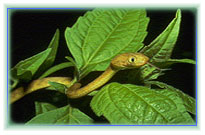 The most reliable method for predicting a
species’ invasiveness, is to extrapolate from its record as
an invasive species under similar conditions elsewhere (Case
Study 3.23 "Invasiveness Cannot Be Reliably
Predicted"). Species known to be invasive elsewhere must
be considered high priority black list species, like the brown
tree snake is for Hawaii. The "pied list" would
contain a section of known pest species (equivalent to black
lists) with strict regulations and measures to ensure
pest-free imports. Another section of the list would describe
species cleared for introduction (white lists) - organisms
declared as safe. All species not listed are regarded as
potential threats to biodiversity, ecosystems, or economy. A
stakeholder proposing an intentional introduction has to prove
the safety of the species in a risk assessment process before
introduction. Species assessed for their likely invasiveness
would be added to the white or black list depending on the
outcome of the investigation. However, since invasiveness of
alien species can vary with time, genetic composition of the
introduced population, and changes in human behaviour (e.g. in
land use), the species on the white lists have to be
re-assessed in appropriate intervals, e.g. environmentally
benign species can become invasives.
The most reliable method for predicting a
species’ invasiveness, is to extrapolate from its record as
an invasive species under similar conditions elsewhere (Case
Study 3.23 "Invasiveness Cannot Be Reliably
Predicted"). Species known to be invasive elsewhere must
be considered high priority black list species, like the brown
tree snake is for Hawaii. The "pied list" would
contain a section of known pest species (equivalent to black
lists) with strict regulations and measures to ensure
pest-free imports. Another section of the list would describe
species cleared for introduction (white lists) - organisms
declared as safe. All species not listed are regarded as
potential threats to biodiversity, ecosystems, or economy. A
stakeholder proposing an intentional introduction has to prove
the safety of the species in a risk assessment process before
introduction. Species assessed for their likely invasiveness
would be added to the white or black list depending on the
outcome of the investigation. However, since invasiveness of
alien species can vary with time, genetic composition of the
introduced population, and changes in human behaviour (e.g. in
land use), the species on the white lists have to be
re-assessed in appropriate intervals, e.g. environmentally
benign species can become invasives.
The GISP mission is to conserve biodiversity and sustain human livelihoods by minimizing the spread and impact of invasive alien species.
GISP Tel: +254 20 722 4462/50 Fax: +254 20 712 2150 Email:
s.simons@gisp.org
Site map
Site visits: 1029958 Page visits: 2390
Copyright © GISP 2008-
This website has been optimised for 800X600 resolution.